
Visible OTA update status
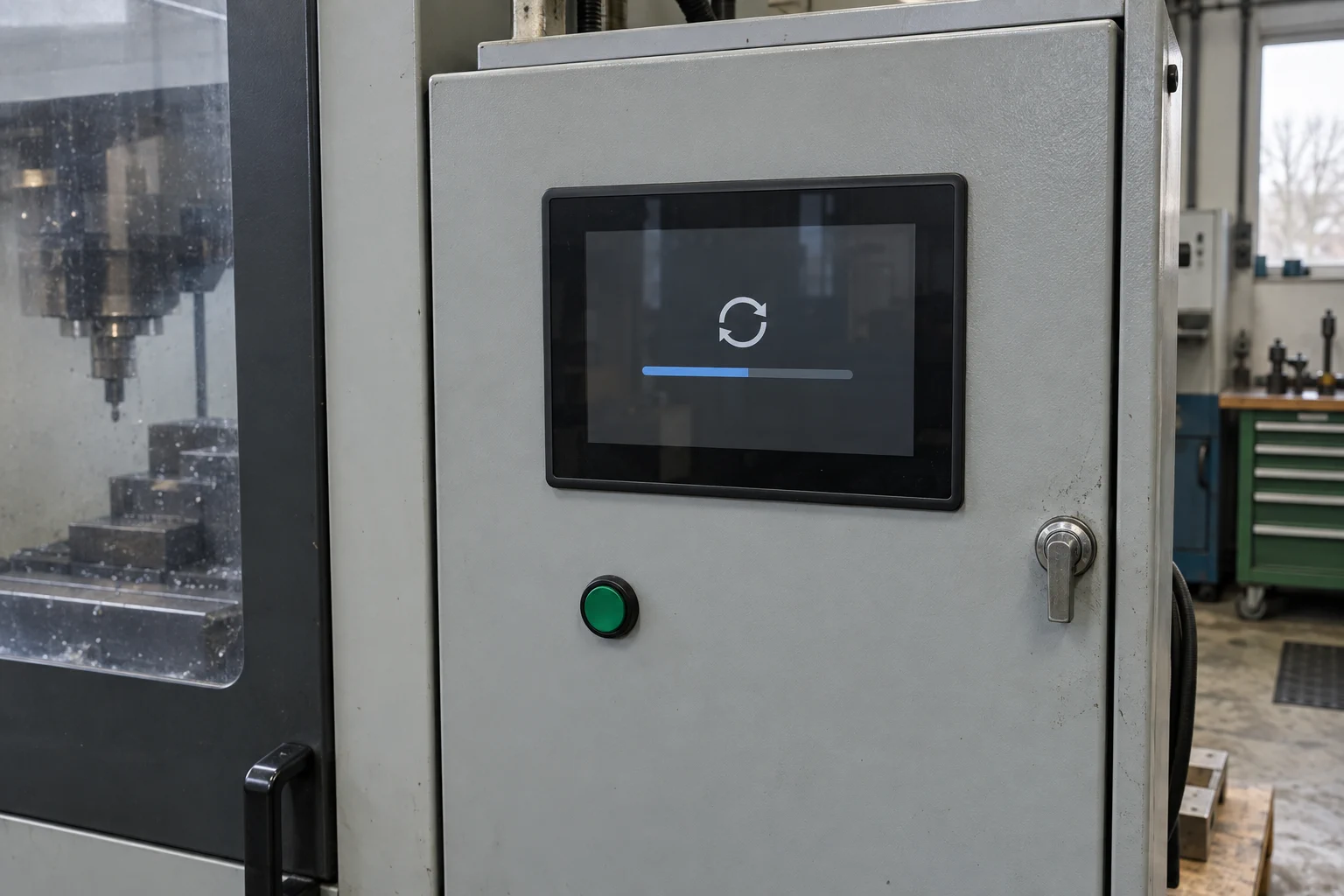
An update can temporarily remove the normal Linux UI at exactly the moment an operator needs reassurance. This study explores keeping a controlled status view on the real-time side while the update system reports agreed, observable milestones.
Intended outcome
Keep the update understandable while the main system changes
The visible experience would remain available while Linux services stop, system partitions change, or the device prepares to reboot. The displayed text and states would come from events that the update integration can actually observe.
The result would be a small, bounded state model such as preparing, installing, verifying, restarting, completed, or attention required. It would not invent a percentage or predict how long the update will take.
Proposed behavior
A project-defined operating sequence
- Update accepted
Linux validates the update request and publishes an agreed start state before disruptive work begins.
- Observed milestones
The update service sends durable state transitions through the project-defined interface.
- Real-time presentation
GraphLab Core keeps the current approved update state visible, including while the normal application is unavailable.
- Restart and completion
Boot and application readiness signals determine when the final Linux UI may replace the update view.
Architecture
Responsibilities stay explicit
The Linux update service remains responsible for package validation, installation, rollback, and the authoritative update state.
A small versioned interface carries only approved milestone identifiers, optional bounded text, and recovery information.
The real-time side renders the last accepted state and follows the project policy for restart, timeout, or missing status.
Project inputs
Integration points to define and validate
- Update framework and its authoritative lifecycle events.
- Message transport, persistence, versioning, and behavior across reboot.
- Approved status vocabulary, localization, and bounded custom text.
- Failure, rollback, power-loss, and interrupted-update states.
- Boot readiness and Linux UI readiness signals after the update.
- Acceptance tests for every supported update and recovery path.
Assess the concept
Could this fit your platform?
Share the target SoC, display path, BSP, Linux UI stack, and the state or failure you need to make visible.
Continue exploring
Related product studies
Add a persistent splash to your Torizon product
Enter the known display timings in the GraphLab Portal, add the generated GraphLab Splash configuration to your Torizon build, and keep a branded screen visible until the Linux UI is ready.
Read the product study
Low-power display operation
Let the real-time core maintain a controlled display while application cores sleep, then request a wake-up when needed.
Read the product study
Critical status fallback during a Linux fault
Return the display to a defined real-time state when Linux stops meeting the agreed health contract.
Read the product study